
That way, you won’t mess up the back of your hair and the baseline, but instead, just create internal layers. If your hair is getting too flat and you’re not sure how to cut long layers, meet your new friend, The deep parallel point cut. Batalla Salva says the DPPC will give you a lot of movement and flow without messing up your hair trying to cut long layers when you don’t know how to. If they don't organically mesh well together, you may have some corners to eliminate or soften up. I am not a fan of a U-shaped haircut, so to avoid this, I first used point cutting to trim my ends on both sides directly across.
How to Fix a Bad Haircut - Oprah.com
How to Fix a Bad Haircut.
Posted: Mon, 25 Jan 2021 16:33:25 GMT [source]
Sections Method
With this in mind, I will start the layers between my cheekbones and chin. Starting just below the chin will always be your safest bet if you have extra long hair. No matter your hair length or face shape, you never want to start your face-framing layers above the cheekbones or nose level. Jessica (she/her) is a deputy editor at the Good Housekeeping Institute and a longtime product tester, reviewer, writer and editor of beauty and lifestyle content. You can usually find her sorting through piles of beauty products — and testing the best ones on camera.
How to Cut Hair in Layers
You can even fade your hair with a one or a two guide, or line your hair, which Dickey says the Wahl Peanut clippers are great for. "I like using the point of the hairline to the ear to make one line, and then you can do these basic lines, like a cross shape for instance," he explains. "You’re dragging your clippers over like you would to draw on an eyebrow, going from the tip of your sideburn area."
How to Cut Your Own Hair Straight
Next, take a deep breath and go to work on the loose hair with clippers. It can be easy to think that your hair needs to be perfectly straight every time you cut a piece, but that’s not necessarily the case. For example, if you are looking for ways to cut your own bangs, twisting the stands might be one of the best ways to get a natural feathered look. Once you’ve cut your hair straight across, you may find that your hair looks a little heavy or blockish. One of the possible ways to lighten the look is to make a few vertical snips into your hair. Read on for valuable advice that will make your haircut a success.
If you've got curly hair, blow-dry your hair straight first before you begin, suggests Dickey. This style is layered with bangs, but you can also just trim the ends of your hair using the same technique. The key is to start small with a few careful snips — and to go slow. You can always take more hair off, but you can't add back what you've already chopped! If you're cutting your hair while it's wet, remember it will look even shorter once it dries, so snip with extreme caution. In fact, if your strands are curly or you're wavy-haired, only cut your hair when it's dry so you can get a better idea of what the final look will be.
How to trim your hair wet
For this, simply combine the sections of hair that you separated before cutting, and then comb it all downwards in front of your face to see if it's even. If some pieces are longer than others, pull the scissors back out and do a little point cutting until everything's the same length, but be careful not to take off too much in the process. Now, when you're ready, take the front triangle section of hair you created and divide it down the middle, as these will be the pieces used to create your layers.
How to Cut Long Layers
Trimming split ends or creating layers if often successful, not every short self-haircut done at home will look fabulous, though. Do not let your free cut turn into an expensive correction and do head to your stylist every time you contemplate something professional-looking. If you already have a pixie, you know you need to cut it when your hair starts getting bushy in the back and bulky around the ears. If you have Type 1 or Type 2 hair, section your head and slide the feather razor down to your end and nip the tips by the neck, trimming them. Since your ends aren’t typically going to be straight like they are with longer hair, it’s easy to just cut where your pixie is growing out unevenly. Getting a perfectly even DIY cut can be tricky, but this tried-and-true method for achieving layers at home is great for beginners.
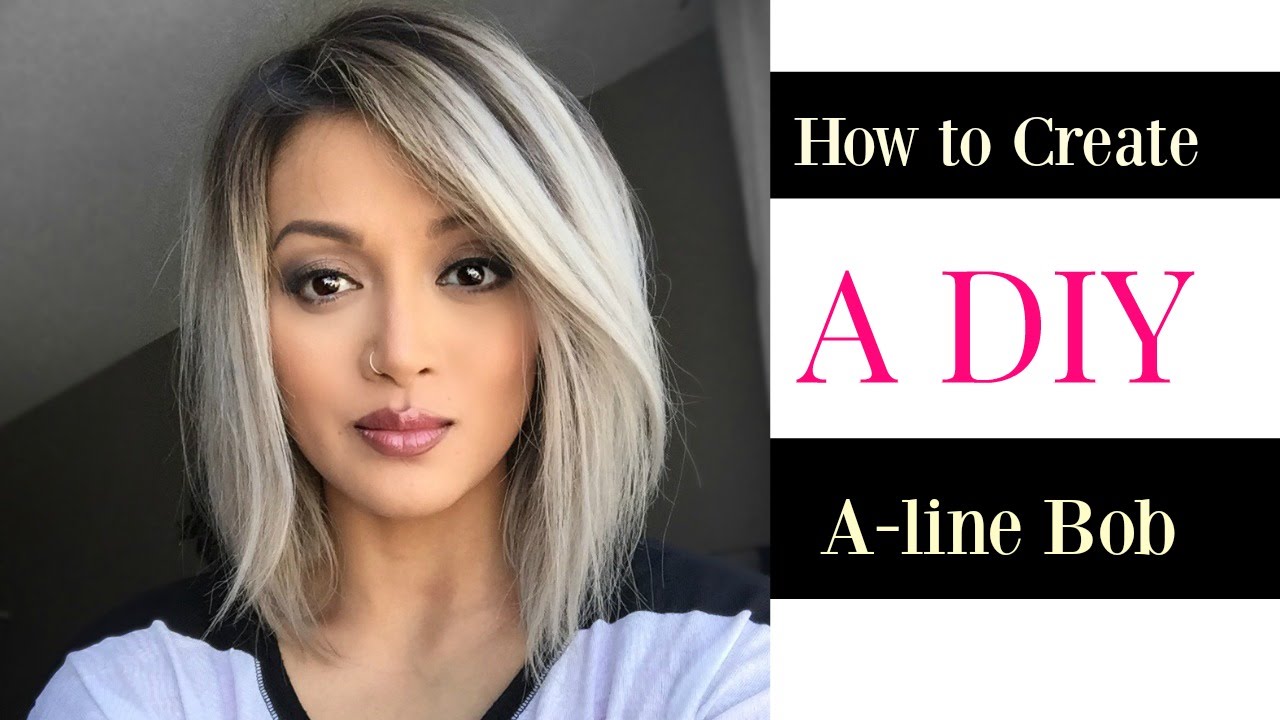
What I like to do is cut above that little ponytail because it's going to create less of a mess all over your floor, but you can also cut below; it just depends on what you prefer. I'm using a brush with very flexible bristles, so it's not going to cause breakage or pull on my hair like a normal hairbrush. After I've cut both sides, I'm just going to fluff it to make sure no curls were missed. If you usually wear your hair parted to one side, then position the ponytail on that side, directly in front of where your part would be. You can decide whether you want the perimeter of your hair at your jawline (which is probably lined up to the back of your hairline), at the bottom of your ear, or above your ear. Fine hair that's flat and lifeless might not be your personal jam — that's OK.
"If you cut your hair in an upside-down frown or smile, that will give you a lob that is a little bit longer in the front, and that’s super cute," Batalla Salva says. First, use the fine tooth end of your cutting comb to bring forward a small quarter-inch section of hair from each side of your natural parting. Carefully bring that down to your starting point, pull it out slightly so you can view what you're doing more accurately, and gently glide your shears down the hair. You will not be closing or dragging your shears but sliding, cutting your way down the hair. Keep reading for more thorough instructions on how to slide cut properly. Despite the current situation, some experts still don't suggest cutting your own hair if it's anything other than a straightforward trim.
The final step — which is optional — is to actually style your hair, as this can help you see if anything needs adjusting. "Blow-dry the hair with a round brush and simply fix the layers as you see fit," says Fitzsimons. Alternatively, you can rough-dry your hair if that's what you normally do.
We can gradually separate our layers by point-cutting directly into a single spot. Slide cutting will give you a perfectly imperfect gradation as a base for your face-framing layers. Use your cutting comb to direct all the hair forward, over your face, and pinch out one tiny subsection at a time, each beneath the other. Taking small subsections and a gentle approach with this cutting method will give you the most control over what you're doing as a beginner. If you like to toss your hair around or switch up your parting frequently, settle on a center parting. Once you've identified and cleaned up your parting, use the edge of your cutting comb to section your hair from about half an inch behind the ears.
Then I'm going to pull the length straighter again and cut into the hair. This gives the hair less of a blunt finish and more soft of a finish. Once you're prepped and ready with your tools laid out in front of you, part your hair where it normally falls. Then, it's time to section the hair, which is super important as it ultimately determines how much you cut.
Remember, when cutting your hair, it does not have to be perfect as you’re going along; it's very easy to go back and trim more off or fix it if you need to if you don't like how it's looking. As I said, I am not a hair professional, but I am very happy with the cut I have achieved. For a different style, you can see my previous tutorial on how to do a wolf cut on curly hair. "Make sure you have hair-cutting shears and not the craft or kitchen scissors you have laying in a drawer somewhere," says Fitzsimons. "Those will actually cause more damage to your hair, and it's a good investment if you plan to be cutting your hair yourself frequently."




No comments:
Post a Comment